
什么是陶瓷? - 陶瓷
Still, to be careful, I pulled into the right lane, slowed down, and listened. The somewhat rapid onset was uncharacteristic of a wheel bearing, but the other symptoms fit. Since I had a recording appointment with a fiddle player, I preferred to keep going, unless of course I couldn’t for safety reasons. The rumbling remained at a constant low level, so I assumed it was a wheel bearing doing the soft failure thing, and continued on.
Although bearing rumble is usually quite clear, part of testing for a bad wheel bearing is to jack the car up, set it on stands, grab the wheel at the 6:00 and 12:00 positions, and push-pull it. If you’re hands are at 3:00 and 9:00 instead, play in a front wheel can come from anything in the steering mechanism, but 6-and-12 play pretty much has to be coming from the wheel bearing. In an old-school car with adjustable wheel bearings, if there’s no rumble, you can try adjusting the bearing by pulling the cotter pin and moving the castellated nut by one notch, but play plus rumble equals bad.
What is a ball bearing used forin real life
● Glass Glass balls are significantly less common and are primarily used where lighter loads are involved and non-metallic properties are required. They are non-magnetic and provide good corrosion resistance, though they are more fragile compared to metal and ceramic balls.
The materials used for the balls in these bearings are selected based on the specific requirements of the application, including load capacity, speed, environmental conditions, and durability. Here’s a closer look at the characteristics and applications of different materials used for balls in ball bearings:
How doballbearings work
Reduce friction for smoother operation and lower energy consumption. Evenly distribute loads, reduce stress, and increase durability. Low friction properties enable machines to run faster, which improves efficiency and performance. Ensure consistent motion and alignment for greater precision. Reduce wear and extend bearing life. Easy to replace, requiring less frequent maintenance. Compact design, small size, and high efficiency. Versatility, and adaptability to a wide range of environments and applications.
Ball bearings are quintessential components in the vast world of mechanical engineering, serving pivotal roles in reducing friction between moving parts. Comprising an array of balls encased between two concentric rings, ball bearings facilitate the transfer of radial and axial loads through their seamless rolling mechanism. Ball bearings are available in a variety of designs and material compositions for use in a wide range of industries.This comprehensive analysis delves into the various types, designs, materials, and innovative applications of ball bearings, illuminating their importance to modern technology and industry.
On 1970s-era BMWs, there are inner and outer front wheel bearings with each sitting in its own race that’s pressed into the hub. Since the front discs on these cars sit on the inside surface of the hub, and since the bearings lift out of their races and present their greasy private parts to you when you pull the hub off the spindle, the advice is that, if there’s no documentation on how old the bearings are, to replace both sets of bearings on both sides when the front discs are replaced.
In the repair world, there are “hard failures” and “soft failures.” Hard failures are things that instantly drag a car to a stop when they break. Broken ball joint? The worst type of hard failure—the front wheel folds under the fender like a broken ankle and you lose control of the car. Bad fuel pump? Usually a hard failure—it either pumps or it doesn’t. (Okay, there are some exceptions. The one my E39 wigged out on a low tank in hot weather, then recovered. I replaced it anyway.)
My ever-rational left-brain shot back indignantly. “You can’t be serious,” it sneered. “You actually had a wheel fall off that 1600 back in 1984. And you’ve had two close calls, both more recently than you’d like to admit. You know what loose lug nuts sound like, and this wasn’t it. And you learned your lesson. You conditioned yourself to always tighten lug nuts with a torque wrench. It’s not loose lug nuts. Really. It’s not. It can’t be. You are not that careless.”
Why Are Ball Bearings So ImportantBall bearings are used in a variety of industries because they increase the efficiency and service life of machines by reducing friction. Critical to the functioning of advanced complex systems — ranging from automotive to aerospace to renewable energy — these components appear practically everywhere in the modern world. In the future, we should see more developments from ball bearing technology to more advanced materials to produce stronger, more resilient products and incorporate smart technology within the ball bearing allowing operators to better predict when the machine may breakdown. These will surely increase their applications and effectiveness and keep industrial machinery and systems and systems management standards on their toes.
I was driving my 2003 E39 530i up to do some recording in Chelmsford, about 30 miles north of me, when I began to hear and feel a rumbling coming from the left front of the car. It ramped up over several minutes, but then plateaued. If it instead had gotten VERY loud VERY quickly, with obvious metal-smacking-against-metal instead of the more gentle rumble of a worn bearing, that would be the hallmark of loose lug nuts, something you need to pay attention to IMMEDIATELY because you may have only five or ten seconds before the wheel falls off.
Utilizing ceramic balls with steel inner and outer rings, these bearings offer superior durability and resistance to wear and tear. Ceramic materials are lighter, harder, and more durable than steel, and also less prone to thermal expansion.
Rollerbearing
● Steel Steel is the most commonly used material for ball bearings due to its excellent hardness and wear resistance, which ensure long service life and reliability. Steel balls can withstand high loads and are suitable for applications involving high speeds and temperatures.
Why do I have these and why can I lay my hands on them instantly? As Joseph Fiennes said in Shakespeare in Love, “It’s a mystery.”
Ball bearingdiagram
Ball bearings operate by rolling motion to minimize friction and allow for smooth rotary movement of mechanical components. They are made of the number of small spherical balls, which sits in a two concentric rings; an inner and an outer ring. When subjected to radial or axial loads, these balls evenly displace the force on their surfaces, reducing strain and wear on the bearing. When the inner ring rotates with the shaft or component it is coupled to, these balls roll along grooves in the outer ring which does not move in most cases. It also creates far less contact area than a sliding motion, reducing mechanical wear and energy loss due to friction as well. Typically the balls are contained by a cage between rotating parts to avoid them colliding against one another during operation, most generating no rotation. This setup allows the ball bearings to manage both high-speed rotation and diverse loads, making them essential in many applications.
● Stainless Steel Stainless steel balls offer enhanced corrosion resistance compared to regular steel, making them suitable for use in environments exposed to moisture or corrosive substances. Stainless steel retains much of the load-bearing capacity of standard steel but usually at a higher cost.
Ball bearings: consist of an inner ring, an outer ring, balls, and a cage (ball retainer). The inner ring is a pressure fit to the shaft on which it must rotate. The outer ring, which fits into a housing generally remains stationary. The balls, or rolling elements that act to reduce the friction and allow for smooth movement between the rings, are described as residing betwixt these two rings. The balls are held in position by a cage, which also prevents the balls from colliding with each other. This configuration permits a hood load managing spread and decreased get-in-touch with tension.
Supporting Loads – Ball bearings are designed to support radial and axial (thrust) loads. The ability to effectively handle these loads makes ball bearings very useful in a variety of environments.
● Plastic Plastic balls are used in applications requiring lightweight, non-conductive, and highly corrosion-resistant bearings. Materials like polyoxymethylene (POM), nylon, and polytetrafluoroethylene (PTFE) are common.
Hard Drives: Bearings allow for the quiet and smooth operation of the spinning disks in traditional hard drives. DVD Players: Bearings are used in the spinning mechanisms of DVD players to ensure that discs rotate smoothly for proper reading and writing of data.
On newer BMWs, the front wheel bearings are very different than on the 1970s-era cars. About ten years ago, I owned a ’99 E39 528iT wagon that needed struts, control arms, and other front-end work. The E39’s wheel bearings are part of an assembly that includes the front hub—the wheel bearing assembly bolts to the steering knuckle, and the wheel bolts directly to the bearing assembly.
What is a ball bearing used forinacar
I then jacked up the left front wheel and rocked it at 6 and 12. Yup, play. Then I spun it. Yup, rumbly. No doubt—a bad left wheel bearing. I set the car back down and began to walk back to the computer to order the bearings, vividly recalling how much of a pain in the butt they were to replace in the 528iT wagon ten years ago. I wondered if maybe still having those eight spare bearing bolts had made the whole thing a matter of fate.
Then I checked the lug nuts on the right front wheel. While none were loose to the point of being free-spinning, all were substantially below the 88 foot-pound torque spec. The rears were fine.
Wind Turbines: Bearings are used in the nacelle and rotor of wind turbines, where they must withstand variable and high-load conditions to ensure efficient energy production.
After the recording session ended, I began driving back toward the highway. As I approached a small service station, I debated stopping to have them throw the car up on the lift and check it, but again, since the rumble remained low and constant, I headed home. Still, to err on the literal side of safety, I stayed in the right lane, turned the flashers on, and drove at 50 mph.

Ship Components: Bearings are used in various ship components, including propeller shafts and deck machinery, where they must be durable and resistant to harsh marine conditions.
These bearings are able to support higher axial loads carrying capacity in one direction along with radial loads. The Permissible angular misalignment between the inner and outer rings is limited to 1.5 and 2 degrees, depending on the series.
In contrast, soft failures are things that either give you ample warning before they fail completely, or their failure doesn’t immediately drag the car into the breakdown lane. A textbook soft failure is when the alternator or voltage regulator dies. Even though the battery is no longer being charged, the car can continue to run for some amount of time off the battery alone. On a vintage car like a 2002, you can likely drive for hours during daylight before the battery no longer has enough juice to light the spark plugs. On a late-model car loaded with electric motors and control modules, you might have more like fifteen minutes to an hour—enough to get to a rest area, possibly even a repair shop.
● Ceramic Ball bearings in particular utilize ceramic materials such as Silicon Nitride (Si3N4) or Aluminum Oxide (Al2O3) for their superior toughness and ability to be used in vacuum forming applications due to them being very hard, light, and thermally resistant. Ceramic balls are lighter and harder than steel, which reduces centrifugal forces, wear, and heat generation at high speeds.
These small-sized bearings are used in applications where space is very limited and precision is key. Despite their small size, they are engineered to maintain high performance and are capable of handling both radial and axial loads.
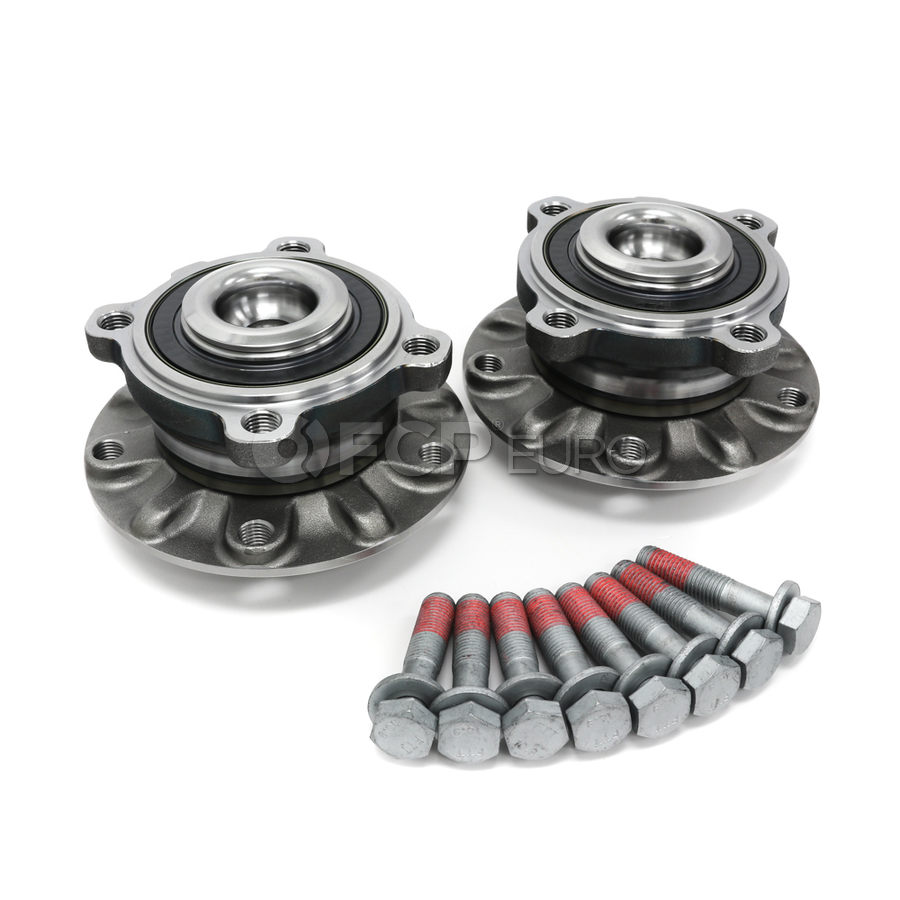
And I’m going to have some sort of voodoo ceremony with that bag of Locktite-coated wheel bearing bolts. I can’t tell whether they were bad juju that triggered the problem or a talisman that warded off disaster, but clearly they played some role outside the normal Western vectors of Newtonian mechanics and Cartesian cause and effect. They deserve reverence.
And so, just to be certain, to placate my left brain and make sure I didn’t go to all that work unless it was absolutely necessary, I took a 1/2-inch ratchet and a 17mm socket and checked the wheel’s lug nuts.
There are many types of ball bearings, and different designs can meet different needs. The following is a detailed analysis of various types. The common types are as follows:
I snugged them down, grabbed the wheel at 6 and 12 and verified that the play was gone, spun it and verified that the noise was gone, let the car down off the jack, and tightened them up with a torque wrench.
Rob’s newest book, The Best of The Hack Mechanic, is available here on Amazon, as are his seven other books. Signed copies can be ordered directly from Rob here.
Reduced Friction – Ball bearings are specifically designed to reduce friction between moving parts within machinery. By providing a smooth ball that rolls rather than slides, resistance to movement is reduced and the reduction in friction also increases the efficiency of the machine.
Deep groove ball bearings are characterized by the large radial load capacity and the ability to also support axial loads in both directions. Designed for durability and easy maintenance.
What is a ball bearing used forin everyday life
To make sure this doesn’t happen again, I’m instituting a new system of checking the lug nuts on all four wheels after I’ve done any work where a car is jacked up for any reason.
Use ofballbearings to reduce friction
Ball bearingexamples
Wheels: Bearings reduce friction between the moving parts of a vehicle’s wheels and axles, ensuring smooth operation and reduced wear. Transmissions: Bearings in transmissions ensure that gears mesh properly and run smoothly, effectively transferring power from the engine to the wheels. Engine: Bearings are used in various engine components to reduce friction between moving parts.
Enhancing Precision and Alignment– In machinery, ball bearings help maintain the alignment of connected components. They ensure that components move along their paths without deviation.
I intentionally jacked up the car at the right front wheel—the one I didn’t think was making the noise—to get a baseline. I grabbed it at 6 and 12, rocked it, verified it was tight, and spun it. As expected, it was quiet.
MRI Machines: High-precision bearings are essential for the smooth operation of the rotating parts within MRI machines and are crucial for generating accurate images. Robotic Surgery Tools: Bearings in robotic surgery systems allow for precise and controlled movement, which is vital for performing delicate surgical operations.
When I arrived home, I pulled the nose of the car right into the garage, then hopped on the laptop to get a set of front wheel bearing on order. I looked on FCP Euro, and was more than a little surprised to find that a front wheel bearing kit with German FAG wheel bearing assemblies now cost $312. Of course, I still had that set of bolts, so I could save myself the $4.29 per bolt right there. I mean thirty-four bucks is thirty-four bucks, right? One FAG bearing was $139. I began entertaining replacing just the left bearing, then price-shopping other manufacturers, when I decided that I should be certain that the wheel bearing was really the problem.
Aircraft Controls: Bearings are used in the control mechanisms of aircraft to facilitate precise movements and to withstand changes in temperature and pressure. Landing Gear: Bearings in the landing gear must be highly durable and capable of handling extreme loads and stresses during landing operations. Engine Components: Aerospace bearings are specially designed to withstand high temperatures and stresses, ensuring reliability and safety in aircraft engines.
Rob Siegel has been writing the column The Hack Mechanic for Roundel Magazine for 35 years, and is the author of eight books available on Amazon. He currently owns thirteen cars. Yes, his wife knows about all of them.
Ball bearings are essential mechanical components used to enable the smooth and efficient motion of low friction between two rotating shafts and their stationary parts. These bearings are made of an inner ring, an outer ring, two rows of balls, and a cage to keep the ball separated, this type allows for high-speed operation and load-supporting capacity.
Conveyors: Bearings allow for the smooth operation of conveyor belts, which are essential for the mass movement of goods in facilities like factories, airports, and distribution centers. Fans: Bearings in industrial fans must be capable of operating at high speeds and often in high-temperature conditions. Pumps: Bearings support the rotating shafts in pumps, ensuring efficient movement of fluids in various industrial processes.
Improved service life and reliability – Reducing friction and evenly distributing loads on bearing surfaces reduces the risk of premature wear.
Perhaps the down comforter of soft failures is a bad wheel bearing. Loss of lubrication will cause them to wear, resulting in a rumble that sometimes can be more felt than heard (they may also squeak or squeal), but the failure process is gradual. They’ll get louder as wear and play embrace each other in an ever-widening downward spiral, but you’d have to be an idiot not to hear it and address it, making outright failure rare. Wheel bearings are pretty robust in BMWs. After owning over 70 cars, I’ve only ever seen one wheel bearing that completely self-destructed—a ’67 2000CS I bought came with one that had destroyed the stub axle. I had to replace the entire front strut assembly.
These bearings are particularly useful in applications where misalignment might occur between the housing and the shaft.
I can only speculate what happened. Due to the space constraints in my garage, when I swap winter/summer wheels, I’ll usually pull one end of the car in, jack it up, swap both wheels, snug the lug nuts with a ratchet, let the car down, torque the nuts, air the tires, then pull the car out, flip it around, and do the other side. I must’ve gotten interrupted. Maybe I received a text I felt that I needed to respond to. Maybe my wife was leaving and I walked outside to kiss her goodbye. Maybe I had back pain and took a break. I don’t know.
Load Capacity: Metallic balls (steel, stainless steel) are preferred for high-load applications. Environmental Resistance: Stainless steel, ceramic, and plastic are chosen based on the chemical and moisture exposure of the bearing. Speed Requirements: Ceramic balls are advantageous in high-speed applications due to their low density and high hardness. Cost-Effectiveness: Steel is generally the most cost-effective option, with specialized materials like ceramics being more expensive but offering unique properties for challenging environments.
Rear wheel bearings on old BMWs are incredibly robust. I’ve only ever had one go bad. It was on a Bavaria that my wife and I took on vacation to Martha’s Vineyard in 1986. We were foolishly driving in near-hurricane conditions and got caught in a tidal surge on the road that runs on the barrier beach between Edgartown and Oak Bluffs and drove through water that was deeper than we expected (as I said, foolish). On the drive home, the right rear wheel bearing began rumbling ominously. At the time, I didn’t own the necessary bearing puller, and had to take the car into the late great Beaconwood Motors who had the back page ad of Roundel for a generation. It was one of a handful of repairs the past 40 years I’ve paid someone else to do.



 8613869596835