
ZWZ Products - Agrobearings - zwz bearing
JavaScript seems to be disabled in your browser. You must have JavaScript enabled in your browser to utilize the functionality of this website.
The diagram below shows the spherical coordinates of a point $P$. By changing the display options, we can see that the basis vectors are tangent to the corresponding coordinate lines. Changing $\theta$ moves $P$ along the $\theta$ coordinate line in the direction $\hat{e}_\theta$, and similarly for the other coordinates.
To find the conversion to Cartesian coordinates, we consider the projection of $\vec{r}$ down onto the $x$â$y$ plane, as shown. Then $z = r \cos\phi$ and $\ell = r \sin\phi$, from which we obtain $x = \ell \cos\theta$ and $y = \ell \sin\theta$.
and we substitute in the expression for $\dot{\hat{e}}_r$ from above. Taking another derivative gives:
A point $P$ at a time-varying position $(r,\theta,\phi)$ has position vector $\vec{r}$, velocity $\vec{v} = \dot{\vec{r}}$, and acceleration $\vec{a} = \ddot{\vec{r}}$ given by the following expressions in spherical components.
\[\begin{aligned} \vec{v} &= \dot{\vec{r}} = \frac{d}{dt}\Big(r \, \hat{e}_r \Big) = \dot{r} \, \hat{e}_r + r \, \dot{\hat{e}}_r \end{aligned}\]
\[\begin{aligned} \hat{e}_r &= \cos\theta \sin\phi \,\hat{\imath} + \sin\theta \sin\phi \,\hat{\jmath} + \cos\phi \,\hat{k} \\ \hat{e}_{\theta} &= - \sin\theta \,\hat{\imath} + \cos\theta \,\hat{\jmath} \\ \hat{e}_{\phi} &= \cos\theta \cos\phi \,\hat{\imath} + \sin\theta \cos\phi \,\hat{\jmath} - \sin\phi \,\hat{k} \\[1em] \hat{\imath} &= \cos\theta \sin\phi \, \hat{e}_r - \sin\theta \, \hat{e}_\theta + \cos\theta \cos\phi \, \hat{e}_\phi \\ \hat{\jmath} &= \sin\theta \sin\phi \, \hat{e}_r + \cos\theta \, \hat{e}_\theta + \sin\theta \cos\phi \, \hat{e}_\phi \\ \hat{k} &= \cos\phi \, \hat{e}_r - \sin\phi \, \hat{e}_\phi \end{aligned}\]
Because $\hat{e}_r$ is a unit vector in the direction of the position vector $\vec{r}$, we know that $\vec{r} = r \, \hat{e}_r$. Then we can differentiate this expression to obtain:
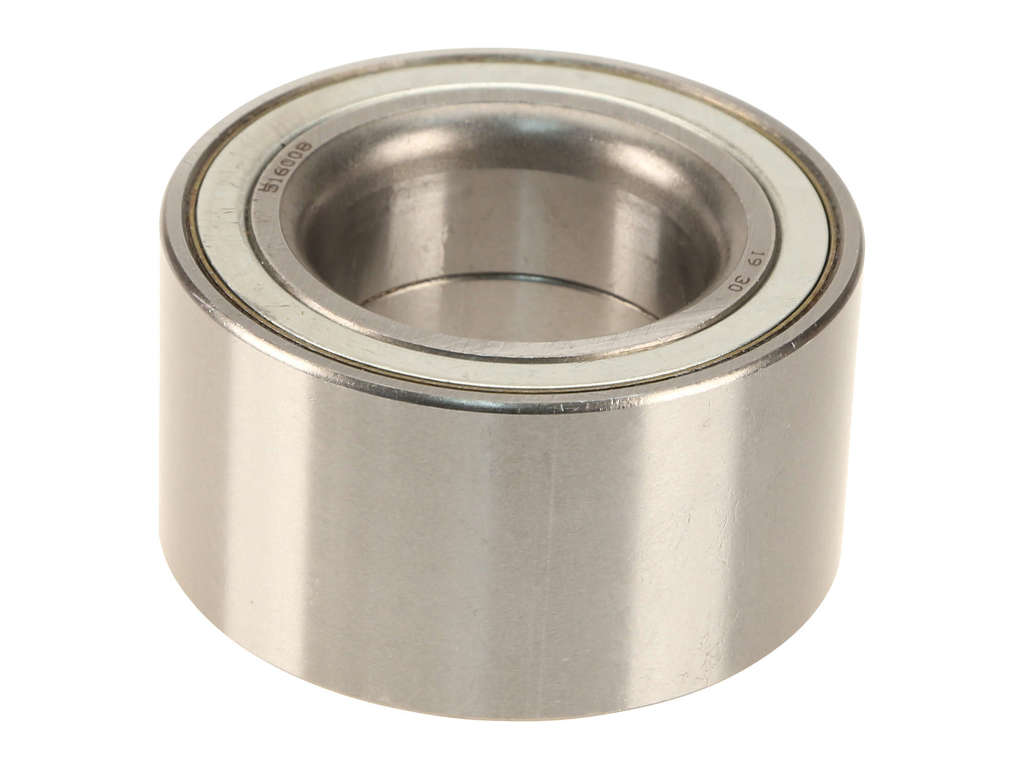
A wheel hub assembly keeps a vehicle's wheels in place. The steering can feel loose when wheel bearings and wheel hubs fail. So, if you are having difficulty ...
\[\begin{aligned} \cos\theta(\sin\phi \, \hat{e}_r + \cos\phi \, \hat{e}_\phi) - \sin\theta \, \hat{e}_\theta &= \cos^2\theta \, \hat{\imath} + \sin^2\theta \, \hat{\imath} = \hat{\imath} \\ \sin\theta(\sin\phi \, \hat{e}_r + \cos\phi \, \hat{e}_\phi) + \cos\theta \, \hat{e}_\theta &= \sin^2\theta \, \hat{\imath} + \cos^2\theta \, \hat{\jmath} = \hat{\jmath} \end{aligned}\]
Sphericaltrigonometry PDF
\[\begin{aligned} \dot{\hat{e}}_r &= \vec{\omega} \times \hat{e}_r = \dot\theta \cos\phi \, \hat{e}_r \times \hat{e}_r + \dot\phi \, \hat{e}_\theta \times \hat{e}_r - \dot\theta \sin\phi \, \hat{e}_{\phi} \times \hat{e}_r \\ \dot{\hat{e}}_{\theta} &= \vec{\omega} \times \hat{e}_{\theta} = \dot\theta \cos\phi \,\hat{e}_r \times \hat{e}_\theta + \dot\phi \, \hat{e}_\theta \times \hat{e}_\theta - \dot\theta \sin\phi \,\hat{e}_{\phi} \times \hat{e}_\theta \\ \dot{\hat{e}}_{\phi} &= \vec{\omega} \times \hat{e}_{\phi} = \dot\theta \cos\phi \,\hat{e}_r \times \hat{e}_\phi + \dot\phi \, \hat{e}_\theta \times \hat{e}_\phi - \dot\theta \sin\phi \,\hat{e}_{\phi} \times \hat{e}_\phi \end{aligned}\]
Emerson Bearing has been providing expert solutions for all your ball and roller bearing needs for the last 50 years. Learn more today!
\[\begin{aligned} x &= r \cos\theta \sin\phi & r &= \sqrt{x^2 + y^2 + z^2} \\ y &= r \sin\theta \sin\phi & \theta &= \operatorname{atan2}(y, x) \\ z &= r \cos\phi & \phi &= \operatorname{arccos}(z / r) \end{aligned}\]
\[\begin{aligned} \vec{r} &= r \,\hat{e}_r \\ \vec{v} &= \dot{r} \,\hat{e}_r + r \dot\theta \sin\phi \,\hat{e}_{\theta} + r \dot\phi \,\hat{e}_{\phi} \\ \vec{a} &= (\ddot{r} - r \dot{\theta}^2 \sin^2\phi - r \dot{\phi}^2) \,\hat{e}_r \\ &\quad + (r \ddot\theta \sin\phi + 2 \dot{r} \dot\theta \sin\phi + 2 r \dot\theta \dot\phi \cos\phi) \,\hat{e}_{\theta} \\ &\quad + (r \ddot\phi + 2 \dot{r} \dot\phi - r \dot{\theta}^2 \sin\phi \cos\phi) \,\hat{e}_{\phi} \end{aligned}\]
There are many different conventions for spherical coordinates notation, so it's important to check which variant is being used in any document. The convention used here is common in mathematics. In physics it is also common to use the same angles, but to reverse the symbol convention so that $\phi$ is the azimuth and $\theta$ is the inclination. Many different names for the coordinates are also used, with the inclination also being called the zenith angle, polar angle, or normal angle. Alternatively, the inclination may be replaced by the elevation measured up from the $x$-$y$ plane. In geographic coordinates the azimuth is the longitude $\lambda$ and the elevation is the latitude $\phi$, while in celestial coordinates the azimuth is the right ascension $\alpha$ and the elevation is the declination $\delta$.
Sphericaltriangle formula
The spherical coordinate system extends polar coordinates into 3D by using an angle $\phi$ for the third coordinate. This gives coordinates $(r, \theta, \phi)$ consisting of:
20231120 — However, if you preferred something different, any wood type would work fine for this simple DIY. To make these wooden lazy Susans, I rip my ...
The basis vectors are tangent to the coordinate lines and form an orthonormal basis $\hat{e}_r, \hat{e}_\theta, \hat{e}_\phi$ that depends on the current position $P$ as follows.
Spherical coordinates are defined with respect to a set of Cartesian coordinates, and can be converted to and from these coordinates using the atan2 function as follows.
The rotation of the basis vectors caused by changing coordinates can be directly computed, giving the time derivatives below.
\[\begin{aligned} \dot{\hat{e}}_r &= \dot\theta \sin\phi \,\hat{e}_{\theta} + \dot\phi \,\hat{e}_{\phi} \\ \dot{\hat{e}}_{\theta} &= - \dot\theta \sin\phi \,\hat{e}_r - \dot\theta \cos\phi \,\hat{e}_{\phi} \\ \dot{\hat{e}}_{\phi} &= - \dot\phi \,\hat{e}_r + \dot\theta \cos\phi \,\hat{e}_{\theta} \end{aligned}\]
Napier's rulesphericaltriangle
The angles themselves may be given in radians or degrees, and are sometimes written in degrees (symbol °), arc-minutes (1/60 of a degree, symbol â²) and arc-seconds (1/60 of an arc-minute, symbol â³). Positive and negative angles are normally indicated by +/-, but sometimes use North/South (N/S) or East/West (E/W). Thus a longitude may be written as $\lambda$ = 88°12â²15â³Â W = 88.2042° W = -88.2042° = -1.53945 rad.
Although it is common to write the spherical coordinates in the order $(r,\theta,\phi)$, this order gives a left-handed basis $(\hat{e}_r,\hat{e}_\theta,\hat{e}_\phi)$, which we can see graphically from the fact that $\hat{e}_r \times \hat{e}_\theta = -\hat{e}_\phi$. We can either work with this as a left-handed basis, or re-order the coordinates to give the right-handed basis $(\hat{e}_r,\hat{e}_\phi,\hat{e}_\theta)$.
Bearings are components designed to connect machine parts. Bearings trans- mit motion and forces. They are usually mounted on axles or shafts and inserted.
Top Job. Located in Falconer, NY. Salary: $19-$20. Express Employment Professionals is currently recruiting for our Falconer, NY client.
SKF USA TKSA 31 Shaft Alignment System, Wired, Laser, 0.07 to 2 Meters, TKSA Series.
Spherical typeformula
\[\begin{aligned} \vec{\omega} &= \dot\phi \, \hat{e}_\theta + \dot\theta \, \hat{k} \\ &= \dot\theta \cos\phi \,\hat{e}_r + \dot\phi \, \hat{e}_\theta - \dot\theta \sin\phi \,\hat{e}_{\phi} \end{aligned}\]
The torque specification for this center axle nut is critical to performance and function of the wheel hub. The wheel hub mounting bolt torque specification ...
Sphericalcoordinates
Spherical typebn pairs
If the spherical coordinates change with time then this causes the spherical basis vectors to rotate with the following angular velocity.
An ab is a stomach, or abdominal, muscle. Doing sit ups and crunches will help you tone your abs.
To normalize these vectors we divide by their lengths, which we can compute to be $\| \vec{e}_r \| = 1$, $\| \vec{e}_\theta \| = r \sin\phi$, and $\| \vec{e}_\phi \| = r$.
Sphericalexcess formula
We can either directly differentiate the basis vector expressions, or we can recall that $\dot{\hat{e}} = \vec{\omega} \times \hat{e}$ for any basis vector $\hat{e}$. This gives:
We write the position vector $\vec{r} = r \cos\theta \sin\phi \, \hat{\imath} + r \sin\theta \sin\phi \, \hat{\jmath} + r \cos\phi \, \hat{k}$ and then use the definition of coordinate basis vectors to find the non-normalized spherical basis vectors:
\[\begin{aligned} \vec{e}_r &= \frac{\partial\vec{r}}{\partial r} = \cos\theta \sin\phi \, \hat{\imath} + \sin\theta \sin\phi \, \hat{\jmath} + \cos\phi \, \hat{k} \\ \vec{e}_\theta &= \frac{\partial\vec{r}}{\partial\theta} = -r \sin\theta \sin\phi \, \hat{\imath} + r \cos\theta \sin\phi \, \hat{\jmath} \\ \vec{e}_\phi &= \frac{\partial\vec{r}}{\partial\phi} = r \cos\theta \cos\phi \, \hat{\imath} + r \sin\theta \cos\phi \, \hat{\jmath} - r \sin\phi \, \hat{k} \end{aligned}\]
,,0.0001, ...
\[\begin{aligned} \vec{a} = \dot{\vec{v}} &= \frac{d}{dt}\Big( \dot{r} \,\hat{e}_r + r \dot\theta \sin\phi \,\hat{e}_{\theta} + r \dot\phi \,\hat{e}_{\phi} \Big) \\ &= \ddot{r} \, \hat{e}_r + \dot{r} \, \dot{\hat{e}}_r + (\dot{r} \dot\theta \sin\phi + r \ddot\theta \sin\phi + r \dot\theta \cos\phi \, \dot\phi) \, \hat{e}_\theta \\ &\quad + r \dot\theta \sin\phi \, \dot{\hat{e}}_\theta + (\dot{r} \dot\phi + r \ddot\phi) \, \hat{e}_\phi + r \dot\phi \, \dot{\hat{e}}_\phi \end{aligned}\]
Sphericaltrigonometry
To convert from Cartesian coordinates, we use the same projection and read off the expressions for the spherical coordinates. This uses the atan2 function to handle the different quadrants for $\theta$.
Changing $r$ does not cause a rotation of the basis, while changing $\theta$ rotates about the vertical axis $\hat{k}$ and changing $\phi$ rotates about $\hat{e}_\theta$. Combining these angular velocities gives the expression for $\vec{\omega}$.
\[\begin{aligned} \cos\phi \, \hat{e}_r - \sin\phi \, \hat{e}_\phi &= \hat{k} \\ \sin\phi \, \hat{e}_r + \cos\phi \, \hat{e}_\phi &= \cos\theta \, \hat{\imath} + \sin\theta \, \hat{\jmath} \end{aligned}\]
Rear wheel and hub assembly for 2002-2006 Nissan Altima. Beck Arnley wheel hubs and assemblies are made from clean steel to ensure bearing life and durability.
To invert the basis change we first observe that we can take combinations of $\hat{e}_r$ and $\hat{e}_\phi$ to give:



 8613869596835