
ZSTK 2,5/1A/1S-H/15 BU - 532 023 04 f plug
Range of self-lubricating bearing bushings for maintenance-free industrial operations. Shock, impact, wear and corrosion resistant – built to last bronze bushings from China. Metal-polymer composite bushing. Metal-Polymer Composite Self-lubricating Bushing Material Steel Back + Porous Bronze Sinter + PTFE bushings, Metal-Polymer Composite Material Bronze Back + Porous Bronze Sinter + PTFE bushes. Committed to the research and development of alloy copper sleeves that meet the actual needs of the market and industry characteristics, provide professional design, development and production of self-lubricating copper sleeve bearings, and always keep in line with the latest technology in the industry. The materials involve copper materials, polymer materials, powder alloys, corrosion-resistant materials, high-temperature self-lubricating bearings, thermosetting materials, high-wear materials and other special materials. Application areas include: auto parts, chemical products, precision gears and other special industries and can customize personalized solutions according to customer needs
In the world of machinery and equipment, the smallest components can often play the most critical roles. One such unsung hero in many applications is the bronze bearing bushing. We are proud to be leading experts in this field, and here’s why our bronze bearing bushings stand out: Self-lubricating: Our bronze bearings come with the unique property of self-lubrication. This means that you don’t need to constantly oil or grease them to ensure smooth operation. They inherently reduce friction, making your machines run smoother and longer.
Our portfolio for this includes wheel bearings, steering and suspension parts, drive shaft assemblies, and strut mountings. By using state- of-the-art sealing ...
Oil Impregnation: The sintered part is soaked in high-grade oil under vacuum. This step is crucial for sintered bronze bearing bearings as they are renowned for their self-lubricating properties. The oil impregnation process is rigorously controlled to ensure that the oil is drawn into the pores of the part correctly.
Powder metallurgy for many people should be very strange because in the design of electronic products used very little, even if useful to, are some standard accessories. For example, high-end smart phones in the SIM card holder, (is to take the card when you need to take a pin to the top, and then pop out of the drawer box, this is metal injection molding powder metallurgy manufacturing out). There is a common life, nail clippers, some of them are also made of powder metallurgy, and then there is the zipper head, gears, etc.. Usually relatively small metal parts, or small appearance of the metal parts used on the parts. Due to the high cost of metal injection molding powder metallurgy manufacturing and processing, while technology continues to progress, many small parts can be replaced with zinc alloy or aluminum alloy and other die-casting metal. But metal injection molding powder metallurgy still has its advantages, for example, stainless steel powder metallurgy, polished to reveal the original color, can be done for decades or even longer will not fade, this is not with electroplating can replace. A. What is metal injection molding powder metallurgy?
4、Post-processing of the product. After the sintering process, according to the different requirements of the product, take a variety of ways. Such as finishing, oil dipping, machining, heat treatment and electroplating. In addition, in recent years, some new processes such as rolling, forging is also applied to the processing of powder metallurgical materials after sintering, to achieve more desirable results.
Sintered Bronze Bushing manufacturer & supplier. We offered bronze bushing is precisely designed by our industry experts employing latest technology in the production process.
Tailored design and guidance for bearing bushing materials, including selection guides for sliding materials and bushing types.
The combination of these materials creates a bushing that exhibits low friction, high load-bearing capacity, and resistance to wear and corrosion. The PTFE lining helps to minimize friction between the bushing and the shaft or other mating surfaces, reducing the risk of galling or seizing.
Please note that this is a simplistic breakdown and there might be other costs involved depending upon the specifics of the manufacturing setup, region, regulations, etc. For a more accurate and detailed cost breakdown, you might want to engage a manufacturing consultant or a cost accountant who specializes in manufacturing.
3. Sintering of billet blocks. Sintering is the key process in powder metallurgy. After forming, the pressed billet is sintered to obtain the required final physical and mechanical properties. Sintering is also divided into unit system sintering and multi-system sintering. For solid-phase sintering of unitary and multiple systems, the sintering temperature is lower than the melting point of the metals and alloys used; for liquid-phase sintering of multiple systems, the sintering temperature is generally lower than the melting point of the refractory components and higher than the melting point of the fusible components. In addition to ordinary sintering, there are special sintering processes such as loose-fitting sintering, melt-impregnation method and hot pressing method.
Oil-impregnated Bushings & Sintered Bronze Bushing. Direct from China Manufacturers. Download this brochure for everything you need to know about our range of plain bushing bearings. It contains an overview of plain bearings, an overview of specifications and more information about materials and lubrication. Of course, you can also find a complete list of dimensions in the brochure.
We offer a wide range of self-lubricating sintered bronze bush solutions, catering to various sizes and design needs. Our inventory consists of a diverse selection of sintered bronze bushes that are readily available in stock. With our comprehensive range, we are confident in satisfying any request or specific design requirement you may have. Whether you need a standard size or a custom design, our sintered bronze bushes are designed to meet your expectations.
Noise reduction: The self-lubricating feature helps dampen noise and vibration, contributing to smoother and quieter operation.
Powder metallurgy is the process of manufacturing metal materials, composite materials and various types of products by forming and sintering metal powders or using metal powders (or mixtures of metal and non-metal powders) as raw materials. The powder metallurgy method has similarities with the production of ceramics, both of which belong to the powder sintering technology, so a series of new powder metallurgy technologies can also be used for the preparation of ceramic materials. Due to the advantages of powder metallurgy technology, it has become the key to solve the problems of new materials and plays a pivotal role in the development of new materials.
Powder metallurgy is a process of forming and sintering parts from metal powders or alloys (or mixtures of metal and non-metal powders) as raw materials. Because it can get the general melting method can not get or difficult to get the products, but also because of its expanding application areas, and attracted great attention. It is not only a material manufacturing technology, but also a material processing technology.
Self-lubricating steel bronze sintered bimetal bearing bushings are widely used in various applications, including engines, pumps, compressors, and heavy machinery. They offer reliable and maintenance-free operation, reduce friction and wear, and provide enhanced performance and durability.
Sintered bushings are an essential component used in a wide range of industrial applications. They are commonly used as bearings, guide bushings, and structural components. The sintering process involves compacting metal powders under high pressure and temperature, which creates a dense, solid material with excellent mechanical properties. In this article, we will explore the advantages of sintered bushings, their applications, and the materials used in their manufacture.
As a manufacturer, we produce different steel bushes dimensions. Extensive Know-How. Short Periods Of Delivery. Small Minimum Quantities. Cost-Effective Prices. Highlights: Brochures Available, Offering Cost-Effective Prices.
These oil-impregnated bronze bushings are particularly ideal for applications like blenders and electric tools, where consistent, reliable, and smooth operation is crucial. They contribute to extending the life of these appliances by reducing wear and tear, minimizing noise, and enhancing overall performance.
Steel bushings & bearings are ideally suited for your grease & oil lubricated applications. Available with plain or grooved sliding layer. Self-lubricating bushing. Short Periods Of Delivery. Small Minimum Quantities. Cost-Effective Prices. Highlights: Brochures Available, Offering Cost-Effective Prices.
Self-lubricating steel bronze sintered bimetal bearing bushings are a type of bearing designed to provide reliable lubrication and reduce friction in various applications. They are commonly used in automotive, machinery, and industrial applications where high loads, shock, and vibration are present.
Oil-impregnated bronze bushings, or self-lubricating bushings, are thus a subcategory of sintered bronze bushings. During the manufacturing process, these sintered bushings are soaked in high-quality oil. This fills the material’s microscopic pores, creating a reservoir of lubricant within the bushing itself.
Metallic bushings, specifically sintered bronze bearings, are known for their self-lubricating properties and maintenance-free operation. These bearings are constructed using porous bronze material, which contributes to their unique characteristics. High load capacity: Sintered bronze bearings can withstand high loads and offer excellent load-bearing capabilities, making them suitable for various applications with heavy loads.
Resistance to wear and corrosion: The bronze material used in sintered bronze bearings provides good resistance to wear and corrosion, enhancing the longevity and durability of the bearings.
Sintered bronze plain bearings – Self-lubricating Bushing, Self-lubrication: The porous structure of the bronze material allows for the retention and release of lubricating oil or grease, ensuring continuous lubrication and minimizing friction.
When the bearing is in use, the heat and friction of operation cause the oil to seep out of the pores, lubricating the interface between the bearing and the shaft. This creates a slick surface that allows the parts to move smoothly with minimal friction.
Metal injection molding ( Metal injection Molding) is a kind of metal powder and its binder plasticizing mixture injected into the model of the molding method. It is to first mix the selected powder with the binder, then granulate the mixture and inject it into the desired shape. The polymer imparts its viscous flow characteristics to the mix, which contributes to the uniformity of forming, cavity filling and powder loading. After forming, the binder is removed and the skimmed blanks are sintered. Some sintered products may be subjected to further densification, heat treatment or machining. Sintered products not only have the same complex shape and high precision as those obtained by plastic injection molding, but also have physical, chemical and mechanical properties close to those of forged parts. This process technology is suitable for high-volume production of small, precision, three-dimensional shape complex and metal parts with special performance requirements. Second, the technical characteristics of metal injection molding powder metallurgy.
RWDR05-R-NBR Radial rotary shaft seal at Schaeffler medias ▻ View all product data here & buy online.
(4) Post-treatment. In general, the sintered parts can be used directly. But for some size requirements of high precision and high hardness, wear resistance of the parts to be sintered post-treatment. Post-treatment includes fine pressing, rolling, extrusion, quenching, surface quenching, oil dipping, and fusion infiltration, etc.
Our sintered bronze bushes are manufactured with a strong emphasis on quality. While our production takes place in China, we ensure that our products adhere to rigorous quality standards. We prioritize the use of high-quality materials and employ advanced manufacturing techniques to guarantee the reliability and performance of our sintered bronze bushes.
Maintenance-free: Forget about constant checks and replacements. Once our bronze bearing bushings are in place, they are designed to last and perform without the need for regular maintenance. Sintered Bronze Plain Bushes Dimensional Made to Order.
ZCuSn6Zn6Pb3 is a national grade and is a cast tin bronze. Good wear resistance and corrosion resistance, easy processing, good casting performance and air tightness. Wear-resistant and corrosion-resistant parts for high loads and moderate sliding speeds, such as bearing bushes, bushings, cylinder liners, piston clutches, pump glands and worm gears. chemical composition: Copper Cu: the rest Tin Sn: 4.0 to 6.0 Zinc Zn: 4.0~6.0 Lead Pb: 4.0~6.0 Note: Sum of impurities≤1.0 Mechanical properties: Tensile strength σb (MPa): ≥200 Yield strength σ (MPa): ≥90 Elongation δ5 (%): ≥13 Hardness: ≥590HB QSn6-6-3 tin bronze rod QSn6-6-3 tin bronze tube CuSn6Zn6(CuSn6Zn) ZQSn6-6-3, tin bronze, Sn 5~7%, Zn5~7%, Pb2~4%, this is a Chinese brand, and the composition of the ZQSn5-5-5 brand is somewhat similar. Sometimes also written as CuSn6Zn6. ZQSn6-6-3 comes from GB 1176-74 “Technical Conditions for Casting Copper Alloys”, which has been replaced by GB 1176-87 “Technical Conditions for Casting Copper Alloys”. There is no ZQSn6-6-3 in GB 1176-87. The similar one is ZQSn5Pb5Zn5, the chemical composition is Sn4.0~6.0%, Pb4.0~6.0%, Zn4.0-6.0%, copper balance. Tin bronze The content of tin is generally between 3 and 4.5%, and it is mainly used to make elastic components and wear-resistant parts. The tin content of deformed tin bronze does not exceed 8%, and sometimes elements such as phosphorus, lead, and zinc are added. Phosphorus is a good deoxidizer and also improves fluidity and wear resistance. Adding lead to tin bronze can improve machinability and wear resistance, and adding zinc can improve casting properties. This alloy has high mechanical properties, anti-wear properties and corrosion resistance, easy cutting, good brazing and welding properties, small shrinkage coefficient, and non-magnetic. Bronze bushings, bushings, diamagnetic elements and other coatings can be prepared by wire flame spraying and arc spraying. Size specifications are Ф20-300 Use of tin bronze: Tin bronze is a non-ferrous metal alloy with the smallest casting shrinkage. It is used to produce castings with complex shapes, clear outlines and low air tightness requirements. Tin bronze is very corrosion resistant in the atmosphere, sea water, fresh water and steam. Widely used in steam boilers and marine ship parts.
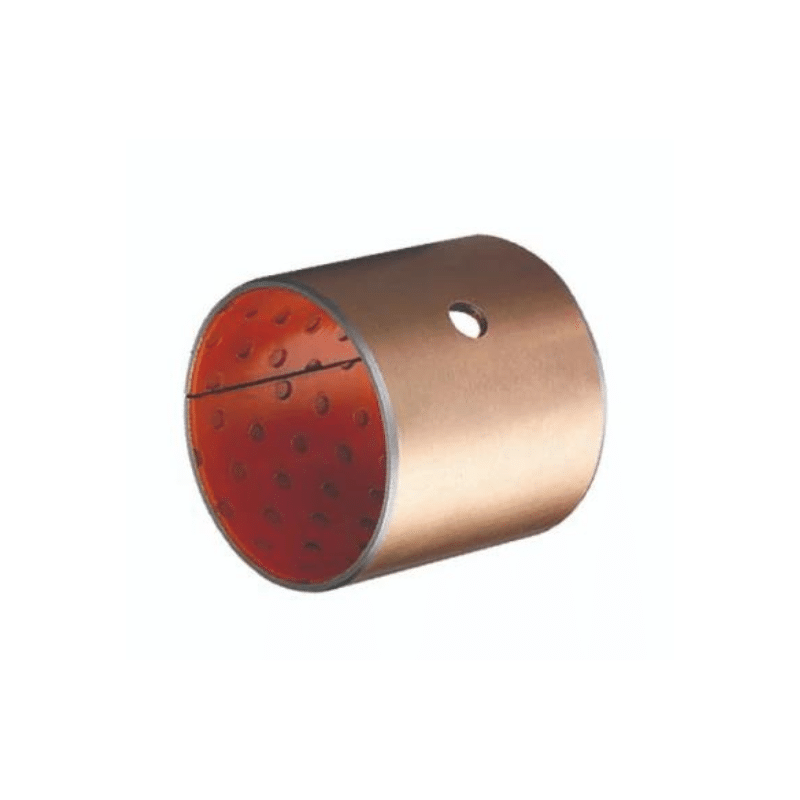
The construction of these bushings typically involves two distinct layers. The first layer is made of a steel backing material, which provides structural support and high mechanical strength. The second layer consists of a bronze sintered material, which is impregnated with a solid lubricant, such as graphite or PTFE (Polytetrafluoroethylene).
1, the preparation of raw material powder. The existing powder making methods can be broadly divided into two categories: mechanical and physical-chemical methods. Mechanical method can be divided into: mechanical crushing and atomization method; physicochemical method is divided into: electrochemical corrosion method, reduction method, chemical law, reduction – chemical law, vapor deposition method, liquid phase deposition method and electrolytic method. Among them, the most widely used is the reduction method, atomization method and electrolysis method.
Oil-impregnated bronze bushings, also known as sintered bronze bushings, are a type of self-lubricating bearing. Here’s a brief overview:
When selecting self-lubricating steel bronze sintered bimetal bearing bushings, it’s important to consider factors such as the specific application requirements, load conditions, temperature range, and the compatibility of the lubricating materials with the operating environment. Consulting with a supplier or manufacturer is recommended to ensure the proper selection of bushings for your specific needs.
The materials used in sintered bushings can vary depending on the application. Some of the most common materials include:
(3) Sintering. It is carried out in a high temperature furnace or vacuum furnace with protective atmosphere. Sintering differs from metal melting in that at least one element remains in the solid state during sintering. Sintering process between the powder particles through diffusion, recrystallization, fusion welding, chemistry, dissolution and a series of physicochemical processes to become a metallurgical product with a certain degree of porosity.
The secret behind these remarkable properties lies in the process of oil impregnation. The bronze material is permeated with lubricating oil, which is released gradually during operation. This not only ensures a constant lubrication but also enhances the durability and performance of the bearing. The result is a product that offers superior wear resistance, improved thermal conductivity, and reduced friction.
Choose from our selection of oil-impregnated bushings,sintered bushing are characterized by being self-lubricating and maintenance-free. The sintered bronze bushing are made of porous bronze or iron and are usually filled with oil. Their high permissible sliding velocities make these sintered bronze bearings ideally suited to rotating applications. The sintered bronze bushings consist of a porous bronze matrix impregnated with lubricant. We Meet Stringent Client Demands Serving a Wide range of Equipment. Manufactured from mix of powdered bronze and other metals the bushes are formed in high pressure moulds, sintered and impregnated with oil. Applications include:
Without specific data on the quantities being produced, the efficiencies of the processes, current material costs, labor rates, etc., it is impossible to provide an exact cost breakdown. You would need to gather this data and calculate the costs based on the specifics of your situation.
May 18, 2004 — It will cause abnormal tire wear, pretty quickly too if the bearing is worn enough. I've never seen one totally fall apart yet, but I did see ...
We produce bronze alloys in compliance with global standards. Get in touch with us. Available in various grades, they meet stringent international standards.
We offer CuSn8 solid bronze wrapped sliding bearings. Customized parts with seals or graphite are available upon request.
Manufacturing a sintered bronze oil-filled bearing bush part involves multiple stages. Here is a general summary of the processes involved:
Powder metallurgy is a manufacturing process that produces precision and highly accurate parts by pressing powdered metals and alloys into a rigid die under extreme pressure. Download plain bearing brochure: Manufacturers and Suppliers of Sintered Bronze Self Lubricated Bushes / Parts, Manufacturers and Suppliers of Sintered Bronze Self Lubricated Bushes / Parts. More sintered bronze bush range : Plain & Flanged Bushes products from china!
It’s important to note that the specific design and performance characteristics of self-lubricating steel bronze sintered bushes with PTFE bushings may vary depending on the manufacturer and application requirements. It’s advisable to consult with a supplier or manufacturer to ensure you select the appropriate bushings for your specific needs.
MYRV. @myrv7538. 1 subscriber•18 videos. At MYRV we are towable enthusiasts. We are excited to help you experience the fun and adventure that a quality RV ...
The general process is divided into: powder making → mixing granulation (metal powder mixed with bonding agent) → injection molding → degreasing → sintering → post-treatment. Here before feeding the mixed powder into particles, and then to better injection molding. 1、Powder making Powder making is the process of making raw materials into powder, the commonly used powder making methods are oxide reduction method and mechanical method. A, oxide reduction method is a solid or liquid reducing agent to reduce the metal oxide made of powder. B, mechanical method is the use of ball milling or the use of power (such as airflow or liquid flow) so that the metal material between the pieces of collision, friction to obtain metal powder method 2、Mixing and granulation Mixing is a variety of required powder mixed in a certain proportion, and homogenize it into a billet powder process. Divided into dry, semi-dry and wet three, respectively, for different requirements. A、Semi-dry type is used for the situation where the density of each component is different and the requirement of uniformity is high, and a small amount of liquid (such as oil) is added when mixing. B. Wet mixing with a large amount of volatile liquid (such as alcohol), accompanied by ball milling, to improve the uniformity of the mixture, increase the contact area between the components and improve the sintering performance. In order to improve the formability of the mix, plasticizer is added to the mix. C. Dry type is used in the case where the density of each component is similar and the mixing uniformity is not high. 3、Injection molding Forming is the process of mixing a homogeneous mixture, loaded into the press mold and pressed into a certain shape, size and density of the shape of the blank. The following two methods are commonly used for press molding. A, heating pressure forming high temperature powder particles become soft, deformation resistance is reduced, with a smaller pressure can be obtained dense shape of the billet. B, room temperature pressure forming in the mechanical pressure between the powder particles to produce mechanical phagocytic force and inter-atomic adsorption, thus forming a cold welding bond, made of the shape of the blank. The advantage is that there is no special requirement for equipment and mold material, and the operation is simple; the disadvantage is that the bonding force between powder particles is weak, and the billet is easy to be damaged, and the billet is formed at room temperature, so it needs to apply a large pressure to overcome the process hardening phenomenon caused by plastic deformation of powder particles. In addition, the density of the pressure-formed billet at room temperature is low, so its porosity is larger. 4、Sintering Sintering is through baking, so that the shape of the billet particles between the diffusion, fusion welding, recrystallization and other processes, so that the powder particles firmly welded together, so that the pores reduce the density increases, and finally get “crystal bond”. So as to obtain the required process with certain physical and mechanical properties. 5、After treatment Powder metallurgy products can be used directly after sintering, but when the performance requirements of the products are high, it is often necessary to post-treatment. The following post-treatment methods are commonly used. A, steam treatment of iron-based parts in 500-600 ℃ water vapor treatment, so that the internal and external surfaces of the parts to form a layer of hard and dense oxide film, thereby improving the wear resistance of the parts and prevent the parts from rusting. (for mechanical parts, such as gears, etc.) B, vulcanization treatment will be placed in 120 ℃ molten sulfur tank parts, after ten minutes to take out, and under the protection of hydrogen gas and then heated to 720 ℃, so that the surface pores of the parts to form sulfide. Sulfide treatment can greatly improve the wear reduction of parts and improve processing performance. C, shaping the sintered parts into a similar structure with the press mold shaping mold, in the press and then a press shape, in order to improve the dimensional accuracy of the parts and reduce the surface roughness of the parts, used to eliminate the trace deformation caused in the sintering process. D, oil infiltration parts into 100-200 ℃ hot oil heavy or under vacuum so that oil penetration into the pores of powder parts in the process, after oil immersion parts can improve wear resistance, and can prevent parts from rusting. (For mechanical parts, such as gears, etc.) E, polishing plating treatment, the product is placed on the polishing jig, manual or mechanical polishing, so that the surface becomes bright, and then cleaned, and then plating treatment. Note: The general process is to mix the metal powder material with the binder according to the proportion, then injection molding, then sintering, and then post-treatment. It should be noted that after the sintering is completed, the product will have deformation, then it needs to do the shaping mold to shape.
Powder Mixing and Compaction: The bronze powder is mixed with a specific binding agent according to sintered bronze bearing standards and then compacted under high pressure to create a “green” part. The green part is not yet strong enough for use but is shaped according to the desired final product.
Sleeve bearings, also known as bushings, are essential components in many machines, such as blenders and electric tools, which reduce friction and allow for smooth movement. The two terms, “sleeve bearings” and “bushings,” are often used interchangeably in the world of machinery.
Step 4: Hence, the answer is 45 f = 7.22222 c. Is 45 Fahrenheit hot or cold? The 45 Degrees Fahrenheit ...
* Our enterprise, is one of the undisputed supplier of the highly competitive bulk order buttons industry in china. Whether you’re looking to get a quote, place an order, or simply have questions about our products, we’re here to assist. Our team is committed to providing top-notch service and ensuring you get the best solution for your needs.
Sintered bronze bearings are characterized by being self-lubricating and maintenance-free. Sintered bronze bearings are made of porous bronze or iron and are usually filled with oil. Their high allowable sliding speeds make these sintered bronze bearings ideal for rotating applications. Oil-impregnated bronze bearings Sintered, self-lubricating sliding bearings. Impregnated with oil, Cylindrical bearings, flange bearings, Material: SINT-A51, Leg630, SS 148321, Oil-impregnated bronze: Cu 89.5%, Sn 9.3%, C 1.2%. Oil content: 29%. Contact us today to explore our extensive range of self-lubricating sintered bronze bushes and experience the quality “Made in China.” We look forward to serving you and meeting your bushing needs.
Environmental management systems — Guidelines for incorporating ecodesign.
2、Powder molding into the desired shape of the billet. The purpose of molding is to produce a certain shape and size of the pressed billet, and make it have a certain density and strength. The method of forming is basically divided into pressurized forming and non-pressurized forming. The most popular method of pressurized molding is molding. In addition, 3D printing technology can also be used for the production of embryo blocks.
Quality Control and Finishing: The final part is subjected to stringent quality control measures and any necessary finishing processes. This may involve precision machining to ensure that the final part adheres to the exact specifications of sintered bronze bearings.
22534. Public lighting facilities means all works or improvements used or useful for the lighting of any public places, including ornamental standards ...
Applications: (automotive, motorcycle, textile machinery, industrial sewing machines, power tools, hardware tools. Electrical appliances . Engineering machinery, etc.) a variety of powder metallurgy (iron-copper-based) parts.
The manufacturing process for sintered bronze oil-filled bearing bushes, according to sintered bronze bearing standards, remains relatively the same as described before but with more precise guidelines and quality control measures. specific process of creating oil-impregnated sintered bronze bearings.
Among the various types of sleeve bearings, sintered bronze bushings are especially useful. They are created through a process known as sintering, where bronze powder is heated below its melting point until the particles bond together. This results in a porous material that is ideal for oil impregnation.
Metal injection molding technology combines the advantages of powder metallurgy and plastic injection molding two technologies, breaking through the traditional metal powder molding process in the shape of the product limitations, while using the plastic injection molding technology can be high-volume, high-efficiency forming parts with complex shapes, becoming a modern manufacturing high-quality precision parts of a molding technology, with conventional powder metallurgy, machining and precision casting and other processing The advantages of conventional powder metallurgy, machining and precision casting processing methods are incomparable. 1, like the production of plastic products to produce small metal parts with complex shapes, suitable for the manufacture of small parts with complex geometry, high precision and special requirements usually weighing in (0.2-200g) 2, can be directly formed thin-walled structural parts, the shape of the product close to or meet the final product requirements, dimensional tolerances can generally be maintained at ± 0.10% to ± 0.30% level 3, compared with traditional machining, precision casting, the internal structure of the product is more uniform; compared with the traditional powder metallurgy pressing sintering, product performance is better, high dimensional accuracy, good surface finish (surface roughness up to Ra0.80 ~ 1.6μm), no need for re-processing or only a small amount of finishing 4, wide range of materials, products with high density (up to 95% ~ 99%), and uniform organization, excellent performance, can be carburized, quenching, tempering and other heat treatment 5, the product microstructure uniform, product density, strength, hardness, toughness, plasticity and other mechanical properties of high, stable product quality, high production efficiency, automation, large quantities, large-scale production Note: When designing the structure, it can be designed in accordance with the structure of plastic products, and the thinnest thickness can be more than 0.3mm. Of course, the thinner the thickness, the poorer the strength of the product, do not think that the metal is very hard, a gentle wrench will be bent.
(1) Production of powder. The production process of powder includes the steps of powder making, powder mixing and so on. To improve the formability and plasticity of the powder usually add oil, rubber or paraffin and other plasticizers.
Hole calc provides a set of simple calculators to determine the diameter of a bore based on the size of three pin gages (aka plug gages or gauges) that fit ...
Oil-impregnated bronze bushings are a popular choice in many applications due to their self-lubricating nature and cost-effectiveness. However, like all components, it’s essential to use them within their specified limits and in suitable environments to ensure their longevity and effectiveness.
Maintenance-free operation: Due to their self-lubricating properties, sintered bronze bearings do not require frequent re-lubrication or maintenance, reducing operational costs and downtime. Find here Sintered Bronze Bush, Sintered Bronze Bushing manufacturers, suppliers & exporters in China.
Metal Injection Molding is a metalworking process by which finely powdered metal is mixed with a certain amount of binder material to form a “raw material” that can be processed by plastic processing equipment through so-called injection molds. This molding process allows complex parts to be molded in large quantities in a single operation. The end product is typically a component item used in a variety of industries and applications. the nature of metal injection molding feedstock flow is defined by a physics known as rheology. Current equipment capabilities require processing limited to a typical volume of 100 grams or less per “shot” into the mold. Rheology allows this “injection” to be distributed across multiple mold cavities, thus making it cost-effective to produce small, complex, high-volume products that would otherwise be quite expensive to produce by other or conventional methods. The various metals that can be implemented in metal injection molding feedstock are referred to as powder metallurgy, and these metals contain the same alloy composition as in industry standards for common and specialty metal applications. Subsequent conditioning operations are performed on the molded shape, where the binder material is removed and the metal particles are coalesced into the desired metal alloy state.
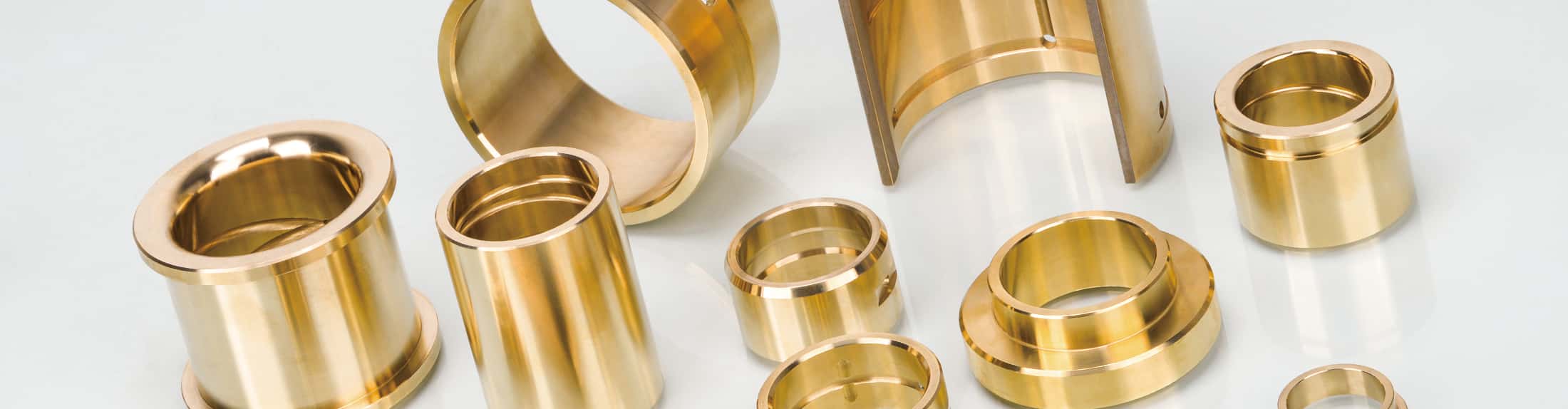
Solid brass bushings available in various bronze alloys including CuSn7ZnPb (RG7), CuSn10, CuSn12, CuPb10Sn, CuPb15Sn, CuAl10Ni, CuSn10Zn (RG10), CuZn25Al5, CuSn5ZnPb (RG 5), featuring lubrication groove designs.
Metal injection molding technology is suitable for iron-based alloy steel, stainless steel, nickel-based alloy, tungsten alloy, cemented carbide, titanium alloy, magnetic materials, Kovar alloy, fine ceramics, etc.
The cost breakdown of manufacturing a sintered bronze oil-filled bearing bush using CuSn10 material is variable depending on a number of factors such as quantity of production, the specific processes used, labor costs, energy costs, etc. Here’s a general idea of how costs might break down:
Each of these steps requires careful control of the process conditions to ensure that the final part meets the required specifications. Any changes in these conditions can dramatically affect the performance of the final part.
Reduce downtime, increase self-lubricating bearing service life & save cost for moving applications. Get Your Instant Quote
Powder metallurgy related enterprises are mainly applicable to the automotive industry, equipment manufacturing, metal industry, aerospace, military industry, instrumentation, hardware tools, electronic home appliances and other fields of spare parts production and research, related raw materials, auxiliary materials production, all kinds of powder preparation equipment, sintering equipment manufacturing. Products include bearings, gears, carbide tools, molds, friction products, etc. In the military industry, heavy weapons and equipment such as armor-piercing ammunition, torpedoes, etc., aircraft tanks and other brakes are required to use powder metallurgy technology production. Powder metallurgy auto parts have become the largest market for China’s powder metallurgy industry in recent years, about 50% of auto parts for powder metallurgy parts.
Packaging and Shipping: Finally, the finished parts are packaged according to sintered bronze bearing standards and shipped to customers.
The construction of these bushes typically involves a steel backing or outer layer, a bronze sintered intermediate layer, and an inner layer or lining made of PTFE. The steel layer provides structural support and strength, while the bronze sintered layer acts as a porous matrix that holds lubricating oil or grease. The PTFE lining offers excellent self-lubricating properties, reducing the need for additional lubrication during operation.
Bushes Bronze Sintered – Bearing Shop Online. Sintered bronze bearings are commonly used in a wide range of applications, including automotive, industrial machinery, agricultural equipment, and more. They are chosen for their reliability, longevity, and ability to operate under challenging conditions while minimizing maintenance requirements.
Material Selection: The choice of material would still be a specific type of bronze powder, typically CuSn10 for bronze bearings.
© 2024 Astro Chemical Company, Inc. | Policy of Ethical Business Practices | Privacy Policy | Website Accessibility | General Terms and Conditions
Sintered bushings are a versatile and cost-effective solution for a wide range of industrial applications. They offer excellent load capacity, self-lubrication, and corrosion resistance properties, making them ideal for use in harsh environments. The materials used in sintered bushings can vary depending on the application, with iron-based, copper-based, stainless steel, and ceramic materials being the most common. If you’re looking for a reliable and durable solution for your industrial applications, sintered bushings may be the right choice for you.
Find here Sintered Bronze Bush, Sintered Bronze Bushing manufacturers, suppliers & exporters in China. Self-Lubricating Bearing Metric Size Sleeve Sintered Bronze Bearing Bushings
Oil-free bearing is a kind of novel lubricating bearing which has the characteristics of metal bearing and oil-free lubricating bearing, the load is borne by the metal matrix, and the specially formulated solid lubricating material plays the role of lubrication. It has high bearing capacity, impact resistance, high temperature resistance, self-lubricating ability, etc. It is especially suitable for heavy load, low speed, reciprocating or oscillating, etc. It is difficult to lubricate and form oil film, and it is not afraid of water and other acid corrosion and scouring.
2023829 — Ball vs roller bearings · Ball bearings are typically better suited for applications requiring high-speed operation due to their lower friction ...
Tough, resilient general purpose epoxy putty. Typically used as a ‘hardware epoxy’ adhesive or filling compound to mechanically secure parts in place. Thicker version of 6000 with a greater sag/slump resistance. Ideal for use on vertical or inverted surfaces.
Self-lubricating steel bronze sintered bushes with PTFE bushings are a type of bearing designed to reduce friction and provide long-lasting lubrication. They are commonly used in applications where low friction and wear resistance are crucial, such as in automotive, industrial, and machinery applications.
1、Computer and auxiliary facilities: such as printer parts, magnetic core, firing pin shaft pin, drive parts. 2, tools: such as gun drills, drill chucks, power tools, hand tools, wrenches and other parts used, milling cutter head, nozzles, etc. 3, household appliances: such as cases, watch chains, electric toothbrushes, scissors, fans, golf heads, simulation jewelry, cutter bits and other parts. 4, medical equipment parts: such as dental orthopedic frame, scissors, tweezers. 5, military ordnance parts: missile tail, gun parts, warheads, drug type cover, fuze with parts. 6, electrical parts: such as micro-motor parts, electronic parts, sensor parts, cell phones, with parts. 7, mechanical parts: such as cotton loosening machines, textile machines, sewing machines, office machinery and other types of small complex parts of machinery. 8, automotive, ship parts: such as clutch inner ring, rocker arm insert, fork set, distributor set, automotive airbag parts, automotive locks. Note: Commonly used on cell phones in the side keys, card holder, notebook computers are often used in the spindle, etc.
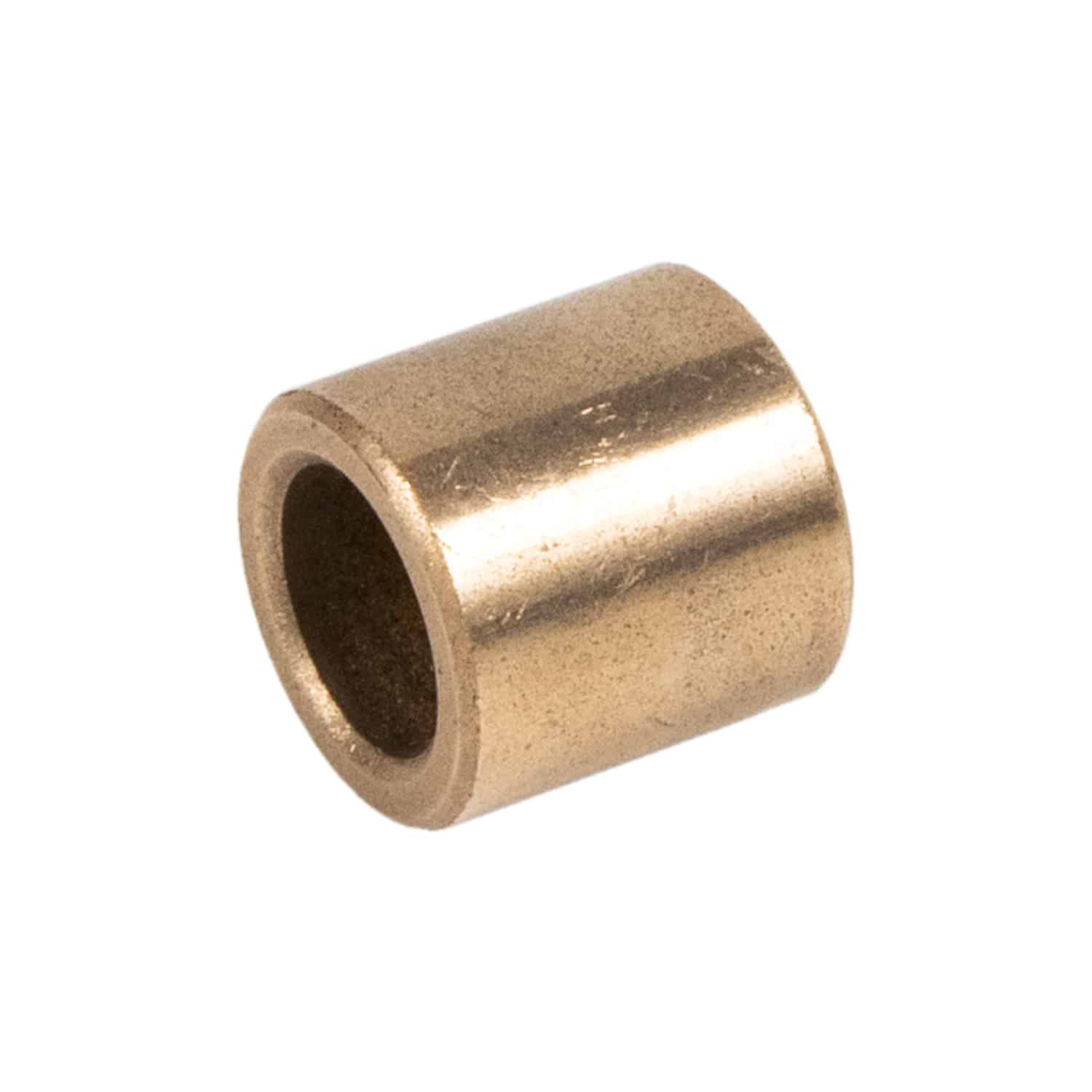
This self-lubrication mechanism is what makes these bearings “maintenance-free.” They do not need additional lubrication during their lifetime, reducing both maintenance time and costs. In addition, they tend to be more durable and have a longer lifespan compared to bearings that need regular lubrication.
When you choose our sintered bronze bushes, you can expect exceptional self-lubricating properties, low friction, and excellent wear resistance. These bushes are engineered to provide long-lasting and maintenance-free operation in a variety of applications. Our dedicated team is committed to providing outstanding customer service. We are readily available to assist you in selecting the appropriate self-lubricating sintered bearings for your specific needs. We can provide technical guidance, answer any questions you may have, and ensure that you find the right solution to meet your requirements.
We now have noticed quite a few new information with regard to cause. Thanks plenty with regard to giving this particular effective and interesting information.
Flanged oil impregnated sintered bronze bushes. This sintered brass bushing can withstand dry condition in medium speed and low load for short time. The sintered bronze bush is widely used in household appliances, electric tools, textiles machinery, chemical machinery and automobiles and official business machines. Sintered bronze bearings are characterized by being self-lubricating and maintenance-free. Sintered bronze bush is mold pressed under high pressure and then sintered under high temperature, and oil is soaked into the homogeneously spreaded tiny pores of the metal under vacuum.



 8613869596835